Two of the most important social and cultural activities found in traditional German-American clubs, especially organizations such as singing societies, Turnvereins, and German heritage clubs, are the Gesangverein (Mixed Chorus) and Schlaraffia.
Gesangverein – Mixed Chorus
A Gesangverein (German for “singing society”) is an organized choir dedicated to preserving the tradition of German choral music. These societies became enormously popular during the 19th century, both in Germany and among German immigrants in the United States. Their purpose was not only musical but also social, providing a place where members could celebrate their heritage through song.
Typical Activities
- Performances at club festivals, Christmas celebrations, Oktoberfests, and civic events.
- Singing traditional German folk songs, patriotic music, classical works, and modern choral arrangements.
- Hosting concerts with other German singing societies.
- Participating in Sängerfeste (Singers’ Festivals), where several choirs performed together.
Social Benefits
The chorus fostered:
- Friendship and fellowship
- Preservation of the German language
- Musical education
- Community service through public performances
Many German clubs in New Jersey, New York, Pennsylvania, Wisconsin, Ohio, and the Midwest maintained active mixed choruses well into the twentieth century. Even today, a number of German-American singing societies continue to perform in both German and English.
Schlaraffia
Schlaraffia is one of the world’s most unusual German cultural organizations. Founded in Prague in 1859, it is an international fraternity devoted to Friendship, Art, and Humor. Rather than being a business or charitable organization, Schlaraffia exists simply for fellowship and the enjoyment of culture.
Motto
In Arte Voluptas
“In Art There Is Pleasure.”
What Members Do
Members gather during the winter season in meetings called Sippungen. These meetings are conducted in a humorous medieval setting where members:
- Wear colorful knight-like regalia.
- Use playful medieval titles.
- Present poetry.
- Perform music.
- Tell humorous stories.
- Give theatrical performances.
- Create artwork.
- Satirize everyday life.
Politics, religion, and business are intentionally left outside the meeting room so the focus remains on friendship and creativity.
Membership
Traditionally:
- Membership is by invitation.
- Candidates are sponsored by an existing member.
- New members complete a probationary period before becoming full members.
- The organization has historically been a men’s society, although family events and social gatherings often include spouses and guests.
International Organization
Today Schlaraffia has:
- Over 200 local chapters (“Reyche”)
- Approximately 10,000 members worldwide
- Chapters throughout Europe, North and South America, Australia, and elsewhere
- Meetings conducted primarily in German using a distinctive vocabulary unique to the organization.
Importance in German-American Clubs
Many German-American clubs offered both activities because they reflected two important aspects of German culture:
| Gesangverein | Schlaraffia |
|---|---|
| Music and singing | Literature, art, and humor |
| Public concerts | Private cultural gatherings |
| Open to mixed voices | Traditional invitational fraternity |
| Community entertainment | Intellectual fellowship |
| Preserves German songs | Preserves German traditions and language |
Together, these organizations helped German immigrants maintain their language, customs, music, and social traditions while contributing to the cultural life of their American communities. Many members belonged to both a singing society and a Schlaraffia chapter, making these organizations central to German-American social life from the late nineteenth century through much of the twentieth century.
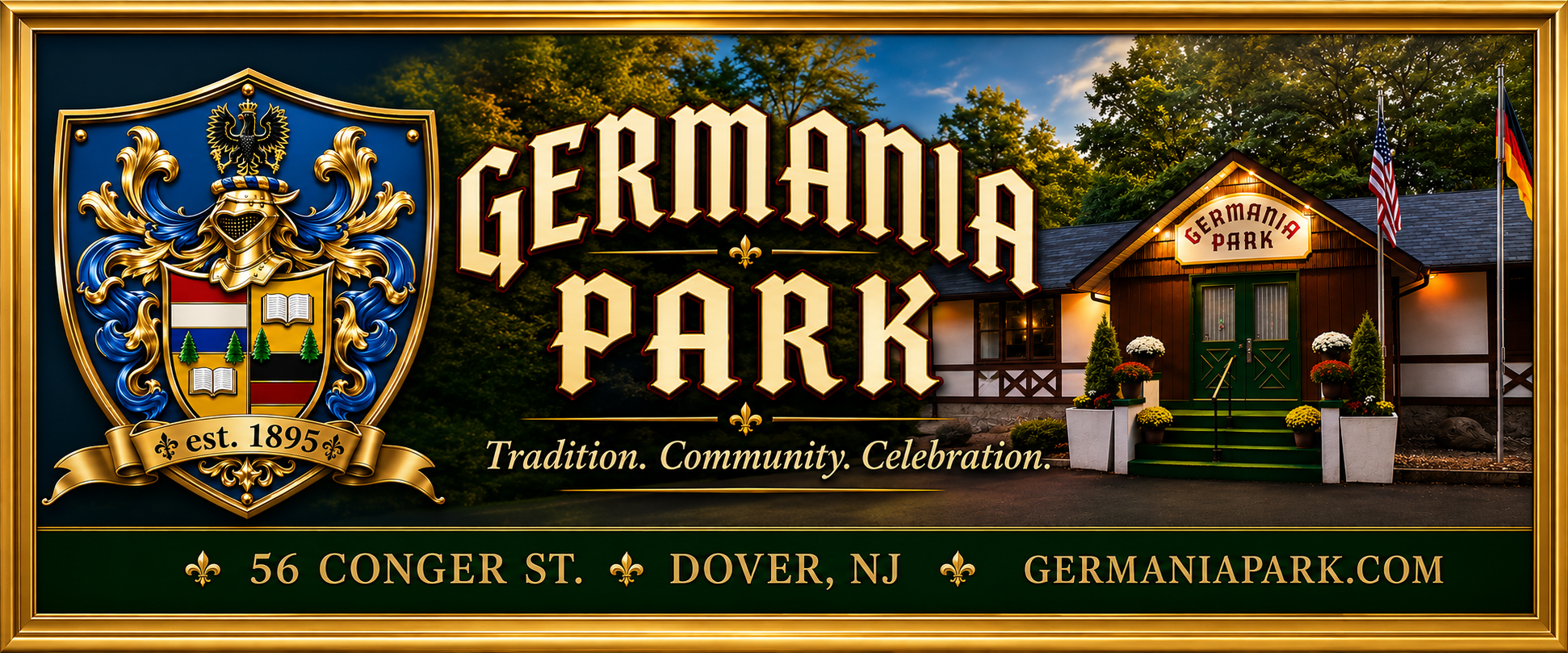
Germania Park (officially the Deutscher Schul- und Gesangverein, or German School and Singing Society) was founded in 1895 to preserve German language, music, customs, and traditions. Throughout its history, the club has offered much more than festivals—it has served as a cultural center where members and their families could socialize, learn, and celebrate their heritage.
The Gesangverein (Mixed Chorus)
The Mixed Chorus remains one of Germania Park’s oldest and most cherished traditions. Originally organized in 1897 as the independent Gesang Verein Dover, it merged with the school society in 1940 to form today’s Deutscher Schul- und Gesangverein.
The chorus:
- Rehearses regularly under a professional music director.
- Performs traditional German folk songs, classical selections, sacred music, and English-language choral works.
- Presents annual or semi-annual concerts.
- Performs during Christmas celebrations, club anniversaries, and special community events.
- Has welcomed guest choirs from Germany, Austria, and other parts of North America.
Beyond entertainment, the chorus has always been a way to preserve the German language and pass musical traditions to younger generations. Membership has traditionally been open to all Germania Park members interested in singing.
Although the school eventually closed because of declining enrollment, it played an important role in preserving German heritage for nearly a century.
Dinner Dances
One of Germania Park’s signature activities has long been its German Dinner Dances.
Typically held on Saturday evenings, they feature:
- Live German-American or Austrian bands
- Waltzes
- Polkas
- Foxtrots
- Modern dance music
- Traditional German cuisine
- Full-service bar
These evenings are designed to recreate the gemütlich (“warm and friendly”) atmosphere of a traditional German social club and are generally open to the public.
Oktoberfest
Germania Park is widely known for its annual Oktoberfest celebrations, which attract visitors from throughout New Jersey.
Activities include:
- German bands
- Folk dancing
- Authentic German food
- Imported German beers
- Family activities
- Traditional costumes (Dirndls and Lederhosen)
The club has hosted dozens of musical groups from Germany and Austria since the 1970s, helping maintain an authentic festival atmosphere.
Friday Night Socials
Every Friday evening the clubhouse has traditionally served as a gathering place for members and guests.
Activities often include:
- Conversation and fellowship
- Cards
- Casual dining
- Drinks at the bar
These evenings emphasize Gemütlichkeit—the uniquely German concept of warmth, friendship, and community.
Seasonal Celebrations
Throughout the year Germania Park sponsors cultural events such as:
- Karneval (German Carnival)
- Schlachtfest (traditional pork festival)
- Christmas parties
- Easter celebrations
- Mother’s Day programs
- Anniversary banquets
- Summer Biergartens
- Hawaiian Night and themed dinners
These events combine traditional German customs with American social traditions, reflecting the club’s German-American heritage.
The club has also made its soccer field available to the Rockaway Township Recreation Department, strengthening its ties to the local community.
Volunteerism
Like many traditional German-American clubs, Germania Park depends heavily on volunteer members. Volunteers organize festivals, prepare food, maintain the grounds and buildings, decorate for holidays, and support fundraising and cultural programs. This spirit of volunteer service has been central to the club since its founding in 1895.
A Living German-American Tradition
For more than 130 years, Germania Park has been far more than a social club. Its activities—music, language, dancing, festivals, dining, and volunteer service—have helped preserve German heritage while welcoming the broader community to experience German-American culture. The club continues this mission today through its active chorus, public events, Friday gatherings, and popular festivals.